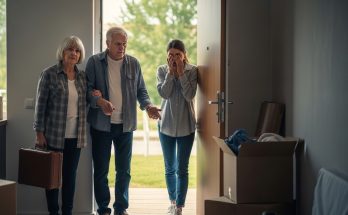
I never expected the past to resurface. One Tuesday night, my fiancée Vivianne and I sat on the couch talking about kids — something we both dreamed of but feared at the same time. She mentioned how exciting it would be, and then gently nudged the topic of medical history, a necessary piece of planning for the future.
“I get that,” I told her, “but what if there’s something in my DNA we don’t know about?” I was adopted as a baby, found abandoned in an alley. It was a painful truth, but my adoptive parents raised me with love and honesty, and I knew everything about my past — or so I thought.
Curious about my genetic health, I ordered a DNA test kit. When the results finally arrived, I logged on — but I’d made a mistake: my settings were public so anyone matching my profile could contact me. That was an oversight I immediately regretted.
Days later, while Vivianne was out running errands, I saw messages in my DNA test inbox: “We think we might be related.” Two names stood out — Angela and Chris. I opened Angela’s first message: she claimed to be my bio-sister and said the whole family had searched for me. My chest tightened. Why now? After all these years?
My initial reaction was to ignore it. I had my family — Vivianne, my adoptive parents — and I was happy. But their messages didn’t stop. They flooded my inbox and eventually found my personal email, even social media accounts. They said things like “You owe us a chance to explain” and “Our parents regret giving you up.” The guilt began to creep in.
Finally, the messages took a dramatic turn: Their mother was sick and needed a liver transplant. They claimed none of her biological children were a match — except me. Suddenly their request wasn’t just about reconnecting, it was about saving a life. I was conflicted.
I called Vivianne, unsure what to do. She told me, “You don’t owe them anything.” But the constant messages made everyday life stressful. So I agreed to meet them — not for closure, but to finally get some peace.
At the coffee shop, all six of them showed up: Angela, Chris, and my supposed biological mother, fragile and tired, flanked by other siblings I’d never met. When I asked the mother if she really needed a liver transplant, her eyes filled with tears. But then I asked the question that changed everything: “Are the rest of your children truly tested and not a match?”
Their answers were vague excuses — fear of hospitals, work obligations — and suddenly their plea started to make less sense. If their mother’s life truly depended on it, why wouldn’t all of them do what was needed?
At that moment I realized this wasn’t a family reunion — it was manipulation. I told them clearly: “You abandoned me once, and now you refuse to help her. I won’t be your solution.” I stood, walked out without looking back, and left them in that café.
That night, I shared everything with Vivianne. She held my hand and said with certainty: “You did the right thing.” I knew then that my life — the one filled with the love of my adoptive family — was the one I was meant to live.