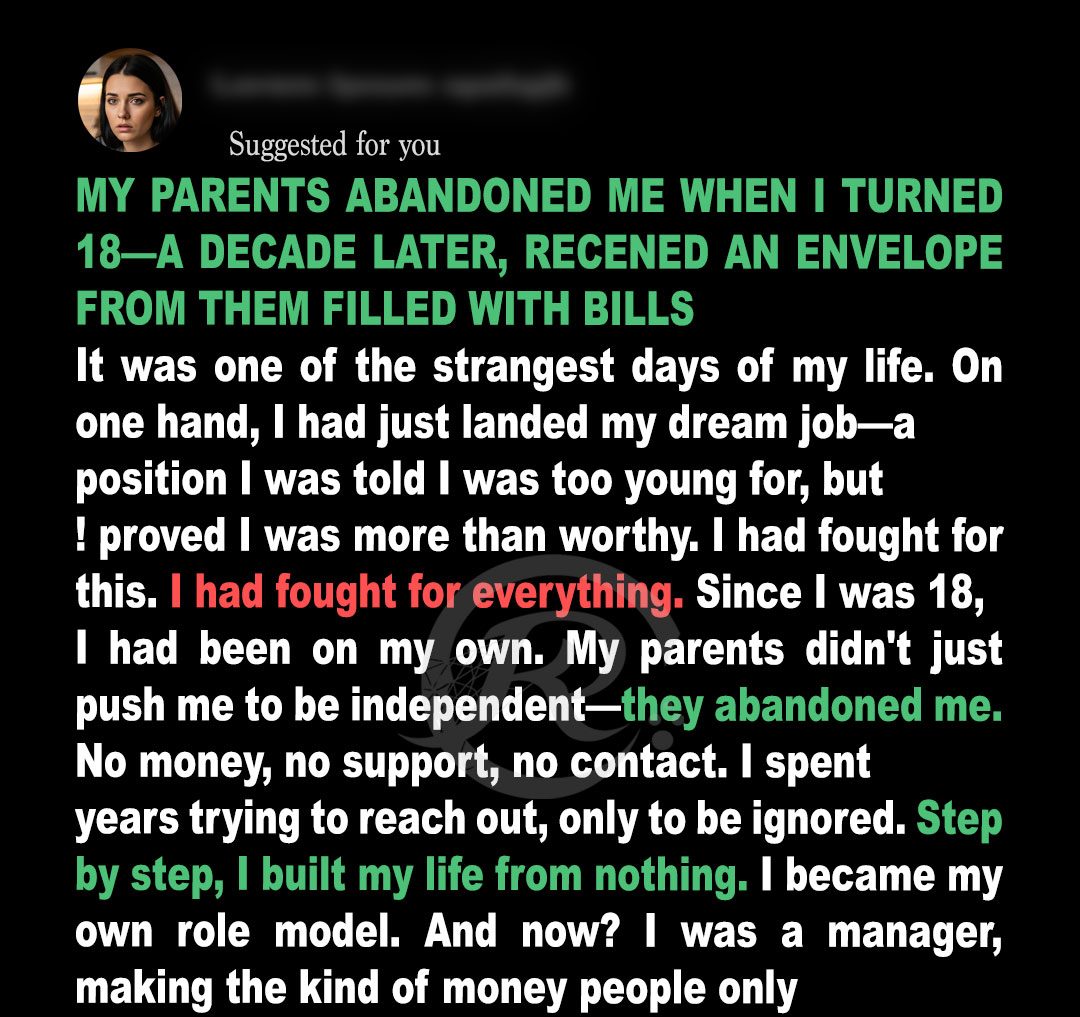
Claire had spent ten years proving she didn’t need anyone but herself. She clawed her way up from nothing, built a life and career with her own hands, and finally landed the job she’d always dreamed of — only to be blindsided by a letter from the past that made her question everything.
The morning she walked into the interview, sleek glass lobby and all, her confidence was quiet but unshakeable. She had rehearsed answers, anticipated every doubt, and stood tall when the board questioned her age and experience. When one executive hinted she was “too young,” Claire didn’t flinch. She explained how she’d earned every skill by working full‑time at eighteen, putting herself through school, and building her career from scratch. In that moment the room shifted. Within minutes she was offered the job.
Walking into her apartment later that evening felt like a victory. Lisa, her roommate and friend, greeted her with a congratulatory glass of wine and a smile as big as the city skyline. They laughed about the interview, Claire shrugging off the age comments, reminding Lisa that she had outgrown “hard” long ago.
Then the mail came. Among bills and flyers was a cream‑colored envelope with a return address she hadn’t seen in a decade — her parents’. Claire froze as the memories rushed back. They had shown up on her 18th birthday, handed her a packed duffel bag and told her she was on her own. No explanation. No goodbye. Just go figure life out.
With trembling fingers, she opened the envelope. Inside were hospital bills — enormous ones — with her father’s name at the top. Her pulse hammered. Why now? Why send this after all this time? Lisa watched in stunned silence as Claire’s face hardened.
Driven by a mix of anger and obligation, Claire drove to the old family home — a weathered house with peeling white paint and the same crooked mailbox she remembered. Her mother came running, tears streaming, calling her name with relief. Claire’s body stayed rigid as her mother tried to embrace her. Too late for that.
When Claire asked where her father was, her mother hesitated, then whispered that he was in the hospital — ill and in need of help. Her voice cracked with emotion, but Claire heard something she’d learned to recognize long ago: practiced performance.
They needed money, her mother said. They needed help now. So Claire went to the bank, prepared to transfer whatever was necessary… until the teller frowned and revealed the truth: the account listed wasn’t a hospital’s. It belonged to a private individual. The “urgent medical fund” was a lie.
Her breath caught. Betrayal stung sharper than she expected. She stormed out of the bank, grabbed her keys with shaking hands, and returned to the house — where the biggest revelation awaited her: her father was not dying. In fact, he was sitting at the dinner table, alive and well, mid‑slice of cake.
The room fell silent. Claire, shaking with fury, accused them of lying and trying to manipulate her success. Her father tried to speak, to explain, but Claire cut him off. She realized then that she had built her life without ever needing their support. She wouldn’t be fooled now.
Claire didn’t leave that day with answers. She left with clarity: some pasts don’t deserve a second chance. And she drove away knowing her independence was worth more than their regrets.