My son wasn’t just part of my life — he was my life. From a previous relationship, he grounded me and gave me purpose. So when I met my husband, I made it clear: my son always came first. He assured me he understood and promised everything would be okay.
For years, things were “fine.” Not perfect — tense, sometimes heated. My husband was strict and demanding. My son, a typical teenager, resisted authority — especially from a man who wasn’t his dad. I played the peacekeeper, constantly smoothing arguments and translating frustrations. It was tiring, but I believed love made it worth it.
Then came the business trip: weeks away, across the country. It was a huge opportunity. I hated leaving them, especially with the underlying tension between husband and son. But he urged me to go. “We’ll be fine,” he said. “It’s important for our future.” He even promised he’d take my son to a basketball game — a peace offering, I thought. Maybe this trip would finally bring them closer.
I was two days from home when his text arrived. Not from my husband — from my son: a single word…
“Help.”
My heart dropped. I called. No answer. Voicemail. Then another text:
“He threw me out.”
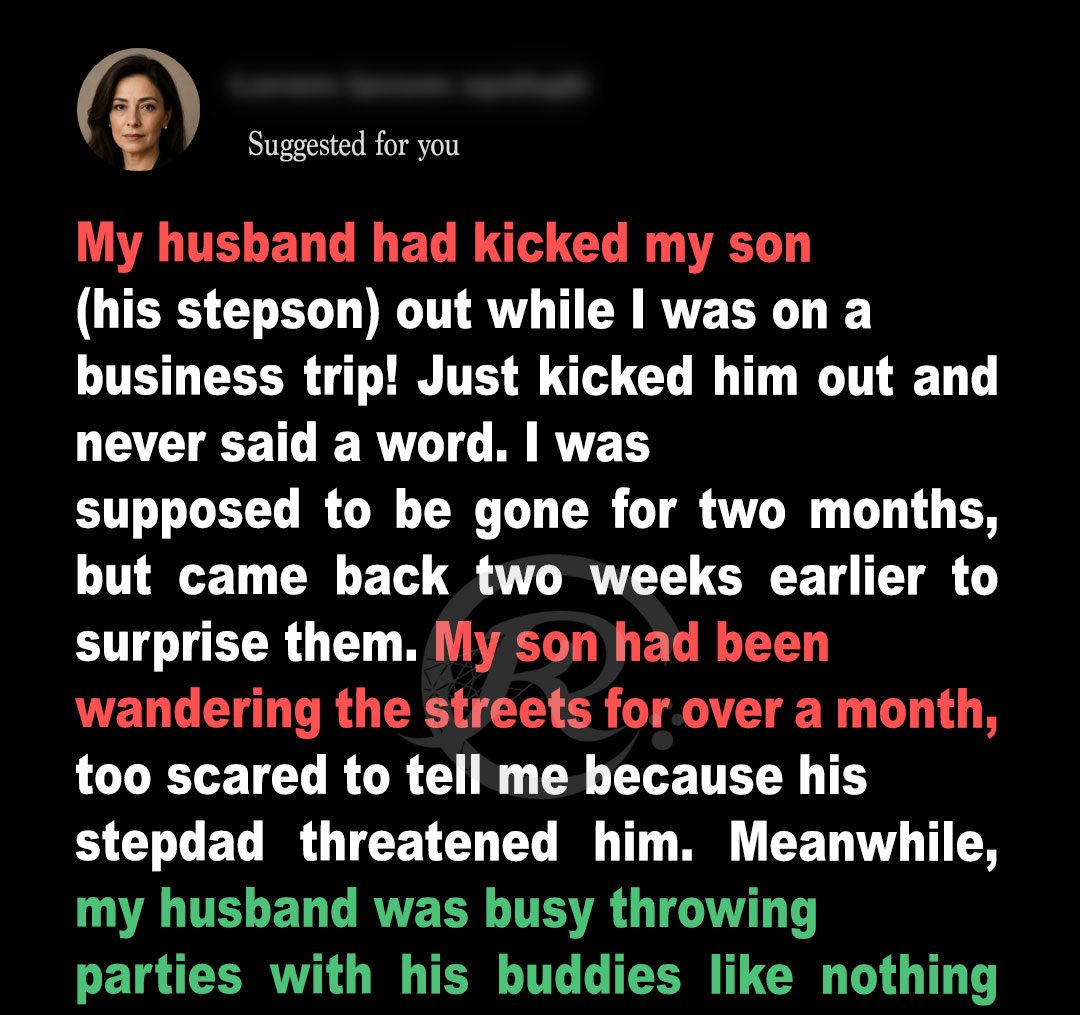
My husband had done it. While I was thousands of miles away — he kicked my son out of our home.
Fear and fury washed over me. I booked the next flight home on the spot, hands shaking so badly I nearly dropped my phone. The flight was a blur of dread: Where is my son? Is he safe? How could he do this? I was furious beyond reason.
When I landed, I demanded answers — first from my husband. His voice was calm — too calm.
“He was disrespectful,” he said. “He needed to learn a lesson.”
My blood boiled.
“A lesson?” I yelled. “You put him on the street! You didn’t call me, you didn’t wait! How could you?”
“He broke a rule — a big one,” he said. “He needed to understand consequences.”
It wasn’t just about broken curfew anymore. It was control. A challenge. He thought he could get away with it because I wasn’t there.
I found my son at a friend’s house — humiliated, devastated, tears in his eyes. He told me the rule he supposedly broke was staying out late — hardly a crime worthy of being kicked onto the street, especially with his mom halfway across the country.
That night, my heart hardened. He wanted to teach my son a lesson? Fine. I planned my own lesson.
The next morning, I returned home alone. The house was cold and silent. My husband was at work. I walked straight to our bedroom, opened the closet, and began packing. Clothes, toiletries, sentimental items. I took the spare car keys. Then I logged into our joint account and transferred half of our money — my half.
I left a note on his pillow:
“You kicked my son out. Now you’ll feel what it is to lose family.”
I went back to pick up my son. When he saw my packed bags, his eyes widened.
“Mom?”
“We’re leaving,” I said, voice trembling but steady. “Both of us.”
We stayed with my sister for weeks. My husband called — angry at first, then confused, then begging. I blocked his number. Part of me knew he felt abandoned. Good. He deserved to feel the weight of what he had done.
My son began to heal. He was quieter, more thoughtful — weighed down by the pain of rejection. But there were moments where I saw him lighter, freer, without the constant edge of tension our old home held.
One evening, while he showered at my sister’s apartment, I was unpacking. Under the bed, in the corner, I found a backpack I didn’t recognize. Something about it weighed heavy. Curiosity pricked at me.
Inside? A small, crudely wrapped bundle of cash. Not loose change — a lot of bills. Then, beneath it, an old leather journal, clearly not my son’s.
It was my husband’s.
Hands shaking, I opened it. The pages, once neat business notes, turned into something darker the further back I went. There were entries — old, then older — about my son. Not typical teenage rebellion. These described how our son was involved in something dangerous — trying to plant drugs in his study, not to use them, but to sell to a dealer he owed money to.
My husband had found messages of threatening demands from this dealer. He’d been desperate to protect us — to pay off this dealer and keep me from knowing the truth. His journal described sleepless nights, terror, and choices no parent ever wants to make.
The cash wasn’t payment from a dealer. It was his emergency fund, money he had been saving — and had given my son to disappear, to get clean, to start over somewhere safe.
He didn’t throw our son out out of cruelty. He did it to protect us, to stop a nightmare from coming true.
And I had walked away.
I stood there, journal in hand, cash spilled across the floor, the sound of the shower ending echoing behind me. My son would be out in seconds.
And my world — the one I thought I knew — had shattered into terrifying pieces.