I never planned to be a stepmother — but when I married Mark three years ago, I knew the package came with his daughter, Lily, then 16. Mark and I met at work, bonded over spreadsheets and coffee breaks, and eventually fell in love. He had primary custody after his amicable divorce with Lily’s mom, Sarah, so Lily lived with us during the week and went to her mom’s on weekends.
At first, Lily was polite, distant but civil. She didn’t call me “Mom,” and I didn’t push it — I understood being a teenager in a blended family wasn’t simple. She helped with dishes, kept her room tidy, and spoke in the typical minimal-teen way about school and friends. Mark always reminded me she was independent by nature.
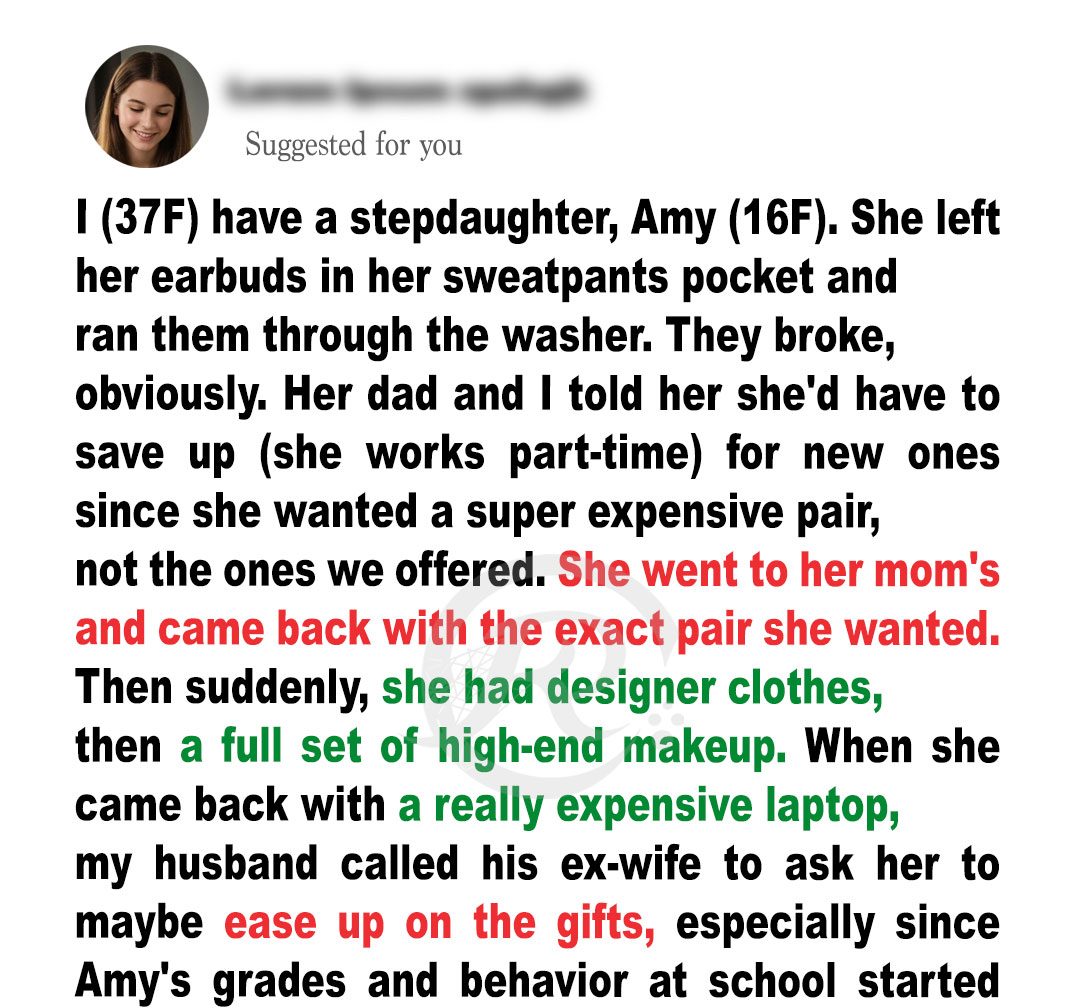
Then three weeks ago, things shifted. Lily came down frustrated with destroyed earbuds she insisted on replacing with $300 premium ones. Mark and I told her if she wanted pricey items, she’d have to earn them. She said she had a job and would save.
A few days later she walked in with those exact expensive earbuds. She said, casually, “Mom bought them for me.” Then came designer clothes, then a professional-quality makeup kit — all explained as gifts from her mom. We were uneasy, especially when a top-of-the-line laptop showed up too. It easily cost more than most people’s monthly rent. Mark immediately called Sarah.
What came next drained the blood from my face: Sarah hadn’t bought any of it. She didn’t even know about the earbuds or clothes — let alone the $3,000 laptop. Mark was stunned. I crept closer to listen as he spoke, realizing none of the supposed “gifts” were from her.
That evening we sat Lily down and confronted her with the truth. At first she denied everything, but eventually her defenses crumbled. In a shaky voice she admitted she’d sold my clothes — pieces from the wardrobe I’d built over years: dresses from big milestones, designer shoes I saved up for, sentimental items I intended to keep forever, maybe even pass down someday.
I couldn’t breathe. I walked to the spare-bedroom wardrobe — once filled with cherished clothes — and now mostly empty. Bare hangers dangled like accusations. My favorite black dress was gone. The vintage coat from an estate sale — gone. Shoes saved for special occasions — gone.
Lily’s voice trembled as she finally understood. “I didn’t think they meant that much… you never wore them.” I explained that they weren’t about use — they were about memory, history, and moments I treasured.
Mark and I took a long, serious breath. We made a plan: Lily had to contact every buyer and try to get the items back. Anything that couldn’t be returned for a full refund she would pay for with her earnings. She’d also do extra chores around the house until she worked off the value of what couldn’t be recovered. And for a month, no phone or laptop privileges except for schoolwork — a rule to help her reflect on honesty and respect.
She nodded miserably. “I really am sorry,” she said with tears. “I just wanted nice things like my friends have.” I told her if she wanted something nice, she could save up and buy it honestly.
It wasn’t about the money or the clothes anymore — it was about trust, responsibility, and the consequences of choices. I hope this hard lesson sticks.