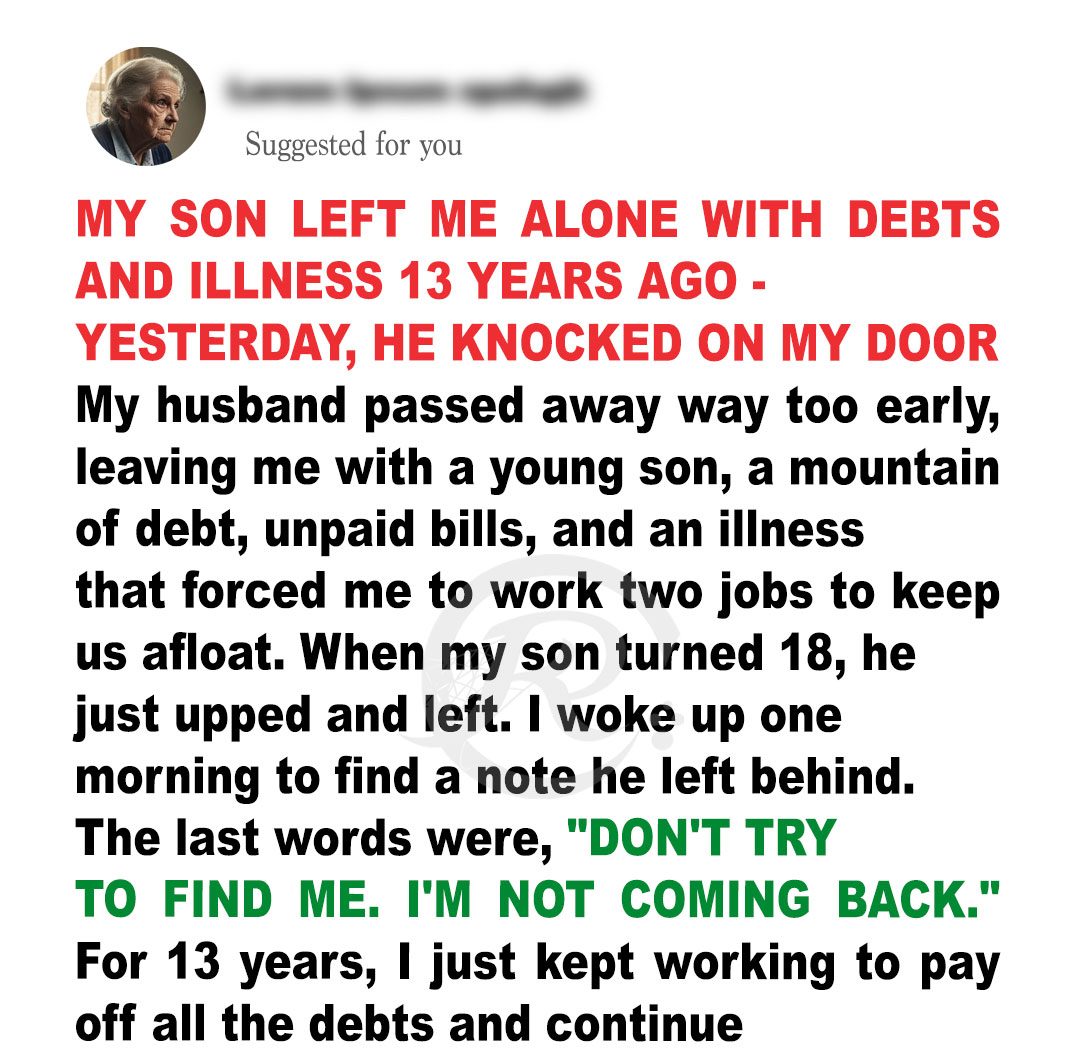
Thirteen years ago, my life fractured into loneliness and exhaustion. My son disappeared without warning, leaving me behind with crushing debt and a chronic illness I couldn’t ignore. I remember that goodbye note so clearly — just four words: “I’m not coming back.”
At first, disbelief hit me like a wall. His room was empty, the bed neatly made, a note folded on the pillow. I cradled it like it was a part of him, unwilling to believe he’d really gone. But gone he was — and suddenly I was alone.
My bills stacked up. My health worsened. The words of Dr. Chen — my doctor — echoed in my mind:
“This treatment is ongoing… and expensive.”
I squeezed every hour I could out of myself — working two jobs, barely sleeping, doing everything to survive.
Days bled into weeks, weeks turned into months, and months drifted into years. Daniel’s room became a shrine — untouched, frozen in time — because I held onto the hope that he would return. But year after year passed with only silence.
Eventually, I adapted. I asked my boss for more hours, no matter how tired I was. I learned to live with pain that never fully left my body. I forgot what rest felt like.
Some nights I wondered if life would ever get easier. I tried dating, but my story made every conversation awkward. How could I talk about those years of struggle without feeling like a burden?
Then one evening, thirteen years after he vanished, there was a knock at my door. My heart stuttered. I opened it… and there he stood — Daniel, now 31, with two suitcases and a hesitant smile.
“Mom… I want to come home.” His voice cracked with vulnerability I hadn’t heard in years. I almost slammed the door. I wanted to shout, to cry, to reject him. But instead, I stepped aside. I let him in.
His confession came quickly:
“I got into trouble… drugs, gambling. I thought leaving you was protecting you.”
He claimed he was clean now and had a job lined up, but his eyes betrayed the pain and regret he carried.
For a moment, part of me wanted to forgive him instantly. But thirteen years of hurt taught me caution. I told him he could stay — for now — while we ate dinner together, silence lingering like a third guest at the table.
Later that night, I woke to strange noises downstairs. My heart sank. I crept down the hallway and found Daniel — rifling through my savings. The money I’d fought tooth and nail to accumulate over all those years.
“What are you doing?” I whispered, but he froze, caught red‑handed. With no pretense left, I said:
“Get out. Now. Or I’m calling the police.”
There was no apology this time — only the slamming of the front door behind him.
In that moment, tears streamed down my face. But there was a strange sense of peace in knowing I didn’t need to chase after someone who chose to betray me twice. I survived the debt, the illness, the pain. I could survive this too.
As dawn broke, I made a choice:
I focus on myself now — on real love and genuine care.
I even called Dr. Chen — not to ask for help, but to tell her that I’m ready for support. And maybe even therapy.
I survived thirteen years without him. I survived the return, the betrayal, and the heartbreak. Now it’s my turn — not to wait for someone who left, but to live for someone who stayed: me.