I walked into that upscale restaurant with quiet hope and my best dress, thinking this job interview could finally turn my luck around. But I had no idea the owner’s words and actions would shatter me — and then unexpectedly reshape my life.
The place was polished and intimidating, with soft jazz music and the rich smell of fine food in the air. I introduced myself nervously at the hostess stand, hands trembling, heart pounding. I was here for a temporary job, just one shift, anything to keep me afloat.
The hostess barely acknowledged me and sent me to wait at the bar. I sat with uncertainty gnawing at my confidence, trying to steady my breath. Then a loud man in a suit snapped into a phone call beside me, full of anger — exactly the kind of person I feared meeting today.
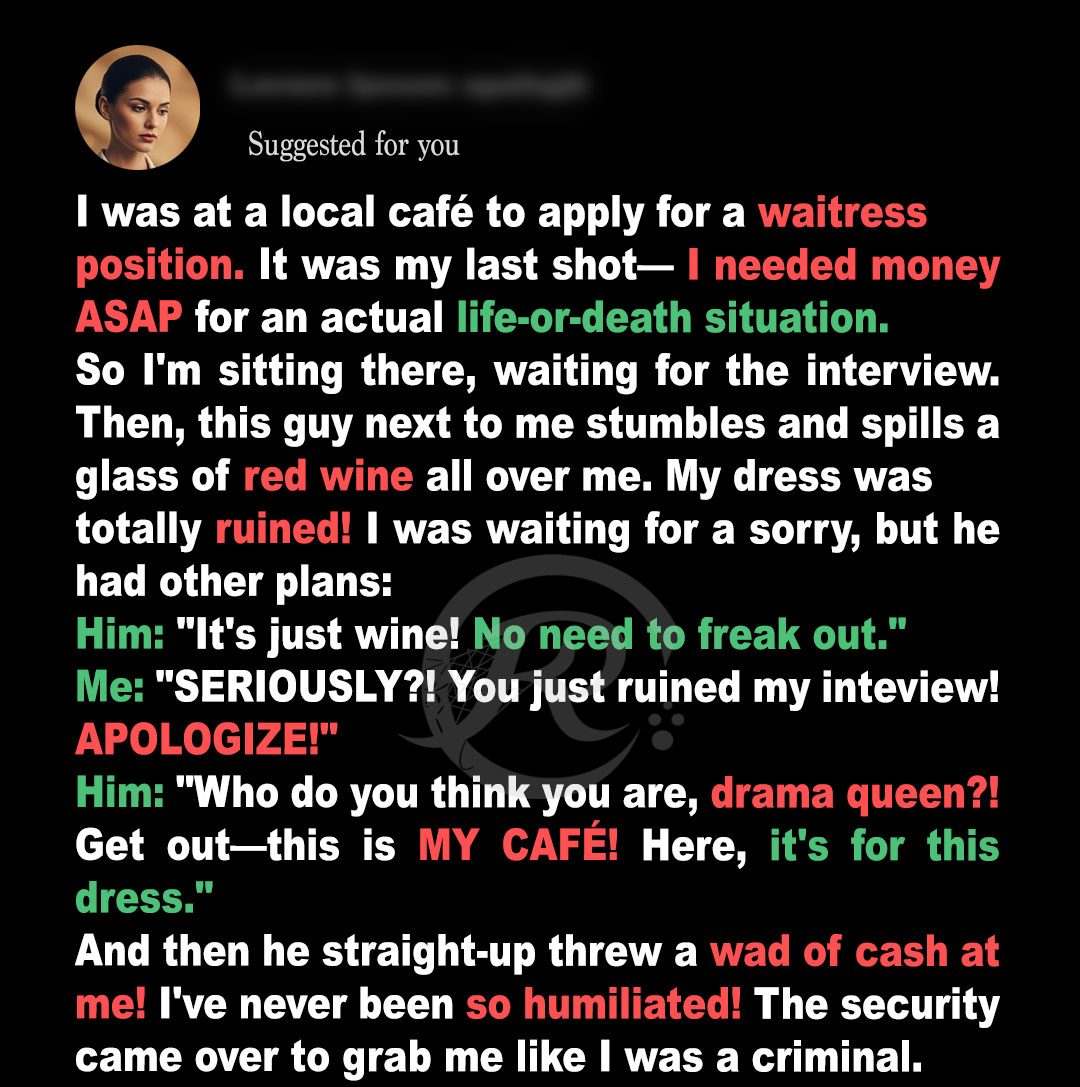
Before I could settle, a glass of red wine splashed across my dress — my only good dress — staining it instantly. The man just snickered, offered me money, and mocked me for caring. I was humiliated, and the staff just stood by. Eventually, the owner himself sneered, called me “pathetic,” and ordered security to throw me out.
Everything went black after that. I woke up in a hospital bed, weak and confused, with a nurse guiding me through a long hallway. To my shock, the same man from the restaurant followed behind — now acting concerned, claiming he had nothing to do with my accident.
When I confronted him, the shift from arrogance to forced politeness was bizarre. He introduced himself as John, apologized clumsily, and vowed to pay my medical bills. But I wanted nothing from him — not money, not sympathy. I just wanted one thing: a peaceful day at the beach I had dreamed about before this all began.
My situation looked bleak. Tests showed I was seriously ill, possibly terminal, and that beach day felt like a fading dream. Days crawled by in the hospital until one evening the nurse told me there was a “surprise.” They wheeled me into a room filled with sand, beach sounds, and sunlight — all recreated indoors. John stood smiling, explaining, “If you can’t go to the beach, then the beach will come to you.”
At first I was stunned, then cautious. He had even placed a light summer dress on a chair, offering it to me. I changed and walked onto the sandy floor, sitting with him, eating food he brought from his restaurant. We talked, slowly shedding the earlier cruelty and opening up. Laughter returned, awkward but real.
Our conversations grew deeper. Fearful of hurting him with my illness, I told him he should distance himself, but he refused. “It’s too late,” he told me softly. “I’m already falling for you.” He held my hand through it all, determined to make the days I had left meaningful.
When I woke one morning and he wasn’t by my bed, I found him at the end of the hallway with a nurse, discussing treatment options in another country — a clinic in Rome offering experimental care. John explained they were giving everything they could to help me live.
As tears welled up, I realized I now felt hope — and something more powerful: love. John might have started as my worst day, but he became the reason I wanted one more day, one more chance at life, joy, and maybe even happiness beyond all that hardship.