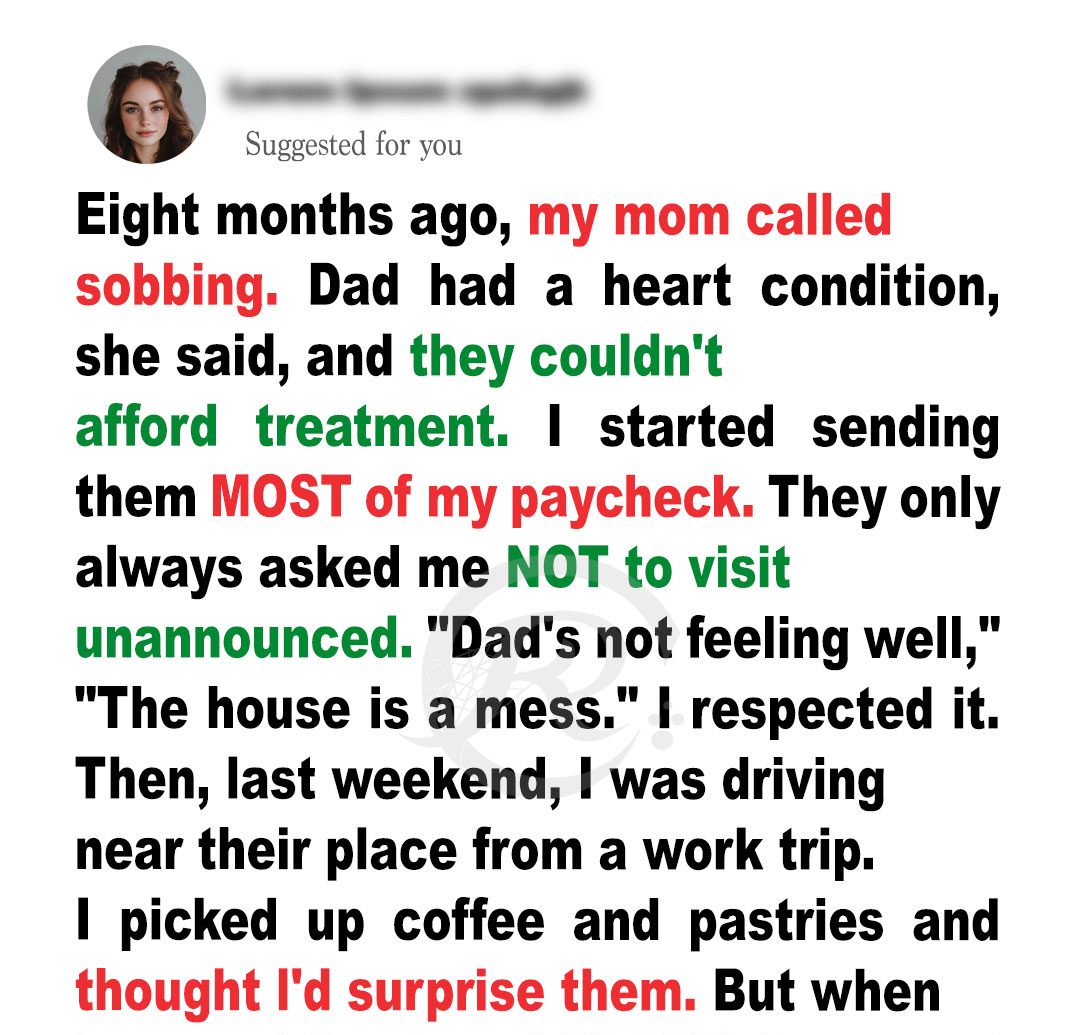
When Rachel’s mom first called asking for help, her voice was thin and trembling — barely stronger than fear itself. It was Wednesday, and she was cooking pasta when the call came. Her mom told her that Dad had been diagnosed with a serious heart condition, medical bills were piling up, and insurance wasn’t covering enough. They begged, quietly and with tears. And Rachel said yes — without hesitation.
For seven months, Rachel transferred over 85 % of her salary to her parents. She kept just enough to pay rent and buy groceries — everything else went to them. Every wire transfer made her feel like she was easing someone’s pain, like she was paying back years of love and sacrifice. She pictured Dad resting easier and Mom making soup in the kitchen, smile on her face. Trust was second nature to her.
They always insisted she shouldn’t visit — “too messy,” “too chaotic,” “too tired” — so she didn’t. Every FaceTime call was brief, half-framed shots of faces and reassurance that “everything’s okay.” Rachel believed them. She trusted them. She loved them.
Then one morning, after a business trip, Rachel found herself near their neighborhood. She stopped for pastries and coffees — knowing exactly what each of them liked — and drove up their driveway with her heart full of hope.
But when the front door opened, what she found wasn’t her parents, struggling and worn — it was a stranger. A woman sprawled on their couch, wearing designer sneakers and holding a flashy phone case, smirking as if she’d been waiting for Rachel’s arrival.
Before Rachel could ask who she was, her Dad stepped into the room — shocked, pale, unsteady. The stranger introduced herself as Melissa — and the truth hit like a punch: Melissa was their first daughter, given up for adoption years ago, a part of the family Rachel had never known existed.
But the truth wasn’t what she expected. Melissa hadn’t come for reunion or healing. She came for revenge, entitlement, and money. She told Rachel that her adoptive parents were strict, never gave her enough, and that she deserved everything Rachel had — including the steady income she earned.
And Rachel’s parents agreed. They spun the lie about Dad’s illness and Mom’s suffering — tears, deception, omissions — and every single dollar Rachel sent went straight into Melissa’s hands. Rachel was heartbroken, betrayed not just by this stranger, but by the parents she thought she was saving.
She confronted them, but all she got were excuses soaked in guilt and fear. Rachel walked out. Dropped her coffee bag on the floor. Drove until the highway was a blur. For weeks, she didn’t answer their calls. She felt erased — like she had never mattered.
Then one day, they stood on her doorstep — worn, aged, burdened with regret. In shaky voices, they admitted Melissa hadn’t wanted them as parents. She used their guilt to manipulate everything. What should’ve been love became a web of fear and betrayal.
Rachel forgave them, but not blindly. She forgave with honesty. She rebuilt those broken pieces not with blind trust, but with truth — the kind that hurts but sets you free. And even though she still loved them, she understood that love without honesty isn’t saving — it’s losing.