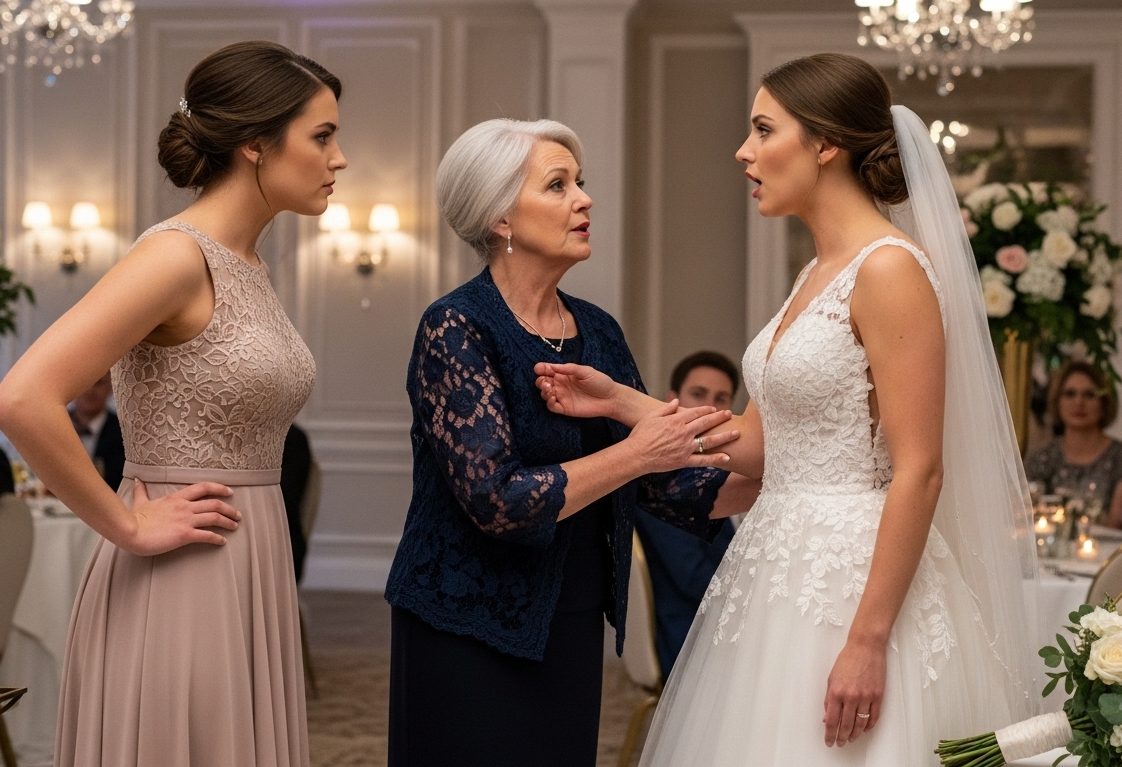
I’ve learned that when people say “family first,” their actions sometimes tell a very different story. My cousin Caroline claimed she understood when I couldn’t attend her wedding because my dad had a massive stroke… but then she sent me a bill for my “empty seat.” What she wanted was money — and what she got was one unforgettable reality check, courtesy of another guest.
About six months before her big day, I was genuinely excited for Caroline. She wasn’t just a cousin — she was someone I grew up with, close enough that I wanted to be there in a big way. I RSVP’d right away, bought a gorgeous dress, helped with her bridal shower, and even took time off work so I could celebrate beside her.
Then life threw something far bigger at me. One month before the wedding, my father suffered a massive stroke. It was terrifying — we didn’t know if he would make it through the night. Thankfully he survived, but his recovery meant he needed constant care. I was the only family member nearby who could help, so I canceled everything — including the trip to her wedding.
Writing the email to Caroline explaining the situation was one of the hardest things I’ve done. I detailed my dad’s condition, the exhausting care he required, and how heartbroken I was to miss her big day — not for lack of wanting to be there, but out of necessity. I ended with a promise to take her out and hear the stories once things settled with my dad.
Her reply seemed kind at first. “Totally understand,” she wrote. “Family comes first.” I breathed a little easier — thinking she actually got it.
But then, a week after the wedding, I got this mass email from Caroline:
“We dropped $3,000 on empty seats, so if you RSVP’d and bailed, we totally expect you to cover your share. We paid for you, now pay us back. Simple, right?”
At first, I thought it was a joke. But it wasn’t. She was serious — treating my dad’s stroke like a cancellation fee. I replied, reminding her that I’d told her well in advance why I couldn’t make it.
Her response was cold: she admitted she said “I understand” before the wedding because she didn’t want drama, but insisted that I should pay because “we already had enough no‑shows to ruin the budget.”
Then a mutual friend, Jenna, texted me with something shocking: she had received that same bill email — even though she was at the wedding. When Jenna confronted Caroline, Caroline tried to dismiss it as an “email mix‑up.” But Jenna didn’t let it go. She replied all to the original message, cc’ing every guest:
“Hey — just wondering, didn’t you get partial refunds for guests who canceled ahead of time? Where is the $3,000 coming from?”
The silence was immediate. No reply from Caroline — not even the dramatic texts she sent me later accusing Jenna and me of “ruining her wedding.”
What happened next was even more telling: guests who learned the truth started distancing themselves from Caroline. Many ignored her messages entirely. People suddenly saw her for who she really was — entitled and insensitive. And I didn’t have to lift a finger.
In the end, Caroline didn’t get my money — she got a bad reputation instead. And I walked away with something better than a refund: peace of mind, family support, and the knowledge that I stood up for what was right.