The ceremony had barely begun when the music stopped and confusion rippled across our guests. My fiancé David was waiting at the altar, my heart fluttered with nerves and excitement — but it all froze the moment I looked down the aisle and didn’t see Amelia, my stepdaughter and flower girl.
Instead, the little figure who approached was my niece Emma, wobbling forward in the flower girl role with a drooping crown that covered one eye. It was wrong — something was very wrong.
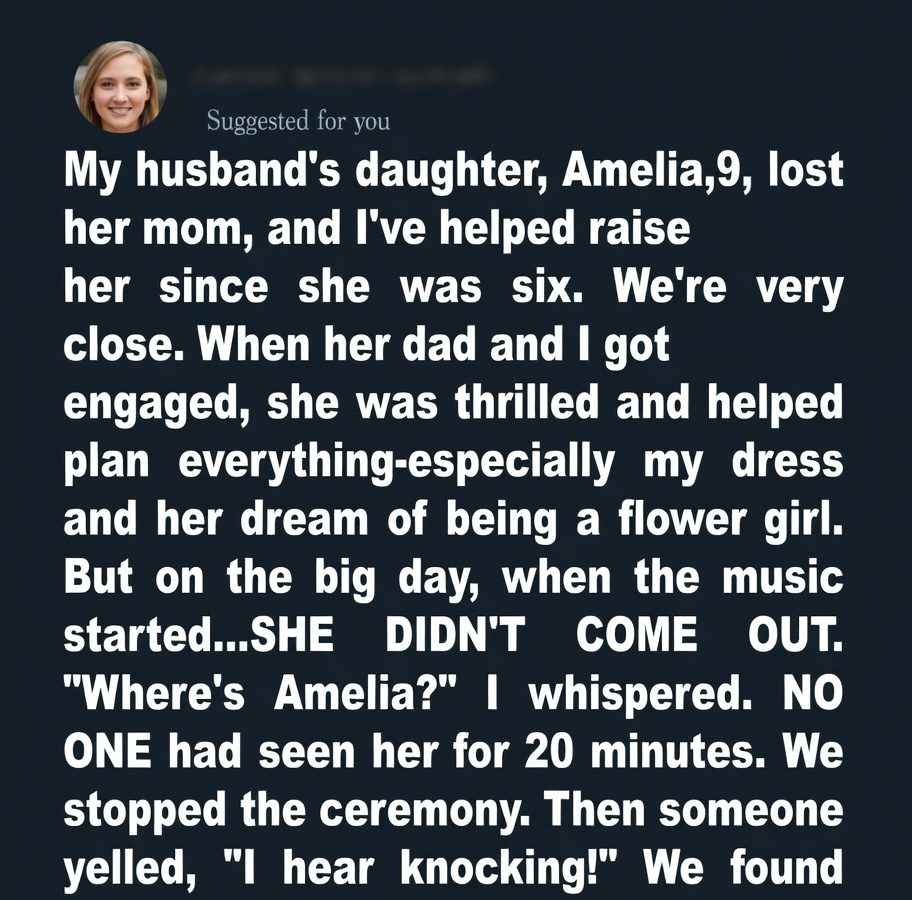
Panic rose like fire in my chest. I whispered to my maid of honor, “Where’s Amelia?” But no one had seen her since pictures were taken before the ceremony. The celebration turned into chaos.
Someone finally heard knocking — a quiet but persistent tapping coming from deep inside the venue. It led us to a dusty supply closet tucked out of sight. When the door opened… there she was. Amelia, curled up in the corner, clutching her flower basket and sobbing.
My heart broke as I wrapped her in my arms. She wasn’t just scared — she felt abandoned. “Why was I in trouble?” she whimpered. She thought she’d done something wrong.
When her trembling hand pointed across the room, my blood ran cold. My sister‑in‑law, Melanie. Amelia whispered through tears that Melanie had pushed her inside and closed the door.
Questions exploded. I asked Melanie directly: Did you lock her in the closet?
Her response was chilling in its casual cruelty. “Come on — it wasn’t that big a deal,” she said, shrugging it off as if locking up a nine‑year‑old child was nothing more than correcting behavior.
And the reason? Melanie wanted the spotlight on her own daughter, Emma — who everyone already called a “miracle baby.” Since her birth, she had been the center of every family gathering, every celebration. She expected adoration — and nothing less.
The guests recoiled. “You locked a child in a closet over a wedding role?” an aunt scolded. We escorted Melanie and Emma out — her protests echoing behind her. “She’ll get over it!” she shouted.
Back inside, I held Amelia close and told her something that mattered far more than ceremony plans. “It’s still your moment if you want it to be.” She was fragile and brave all at once — and she nodded.
So we started the processions over. This time, parents and guests stood, clapped, and cheered as she walked down the aisle with courage in her step and petals at her feet.
The day didn’t end in shame — it ended in her triumph. Even now, she keeps her flower basket by her bedside, a reminder of what she overcame that day. And every time I tuck her in, she smiles and says, “Remember when I was the bravest flower girl ever?”
“Yes, sweetheart,” I always reply. “I remember.”