For three years, Liam and I were that “stable couple” everyone envied — predictable routines, safe choices, and dreams of building a family together. I worked in restaurant marketing, he advanced in tech, and we talked constantly about the future. Then came the pregnancy… and the miscarriage that shattered everything.
After losing the baby, I became numb with grief. Liam distanced himself instead of comforting me. I assumed he needed space — a mistake I’d regret. One day, while I was at a grief-support session, I came home early. In the kitchen, there they were: Liam and my childhood best friend Daria — half-dressed, laughing, feeding each other whipped cream.
Shock and fury washed over me, but I was too hollow to cry. I walked into the room and simply said, “Out.” They stumbled over excuses, but I changed the locks, canceled the lease, and filed for divorce that very day. Daria had been a trusted friend — now she was the face of betrayal.
The next months blurred into tears, therapy, and anger. I replayed moments, wondering how I missed the signs. They’d spent dinners and holidays together as a trio. Their closeness had seemed innocent — until it wasn’t. During the divorce, Liam admitted the affair, then chose her without hesitation. A week later, they posted smiling photos from Mexico, captioned “Healing comes in waves.” I cut them off everywhere and focused on healing on my terms.
The divorce was messy. Liam wanted half of everything — even the dog he barely walked. But I fought for the house and its contents, letting him take the rest. I sold it soon after; too many memories haunted the walls. I vowed to start fresh.
Two years passed. I rebuilt my life. With savings, a scribbled business plan, and a bit of courage, I opened a restaurant called Gracie’s Table, named for my grandmother’s soul-food kitchen where I learned to cook. It wasn’t easy — rejections piled up — but I kept going until one investor believed in me.
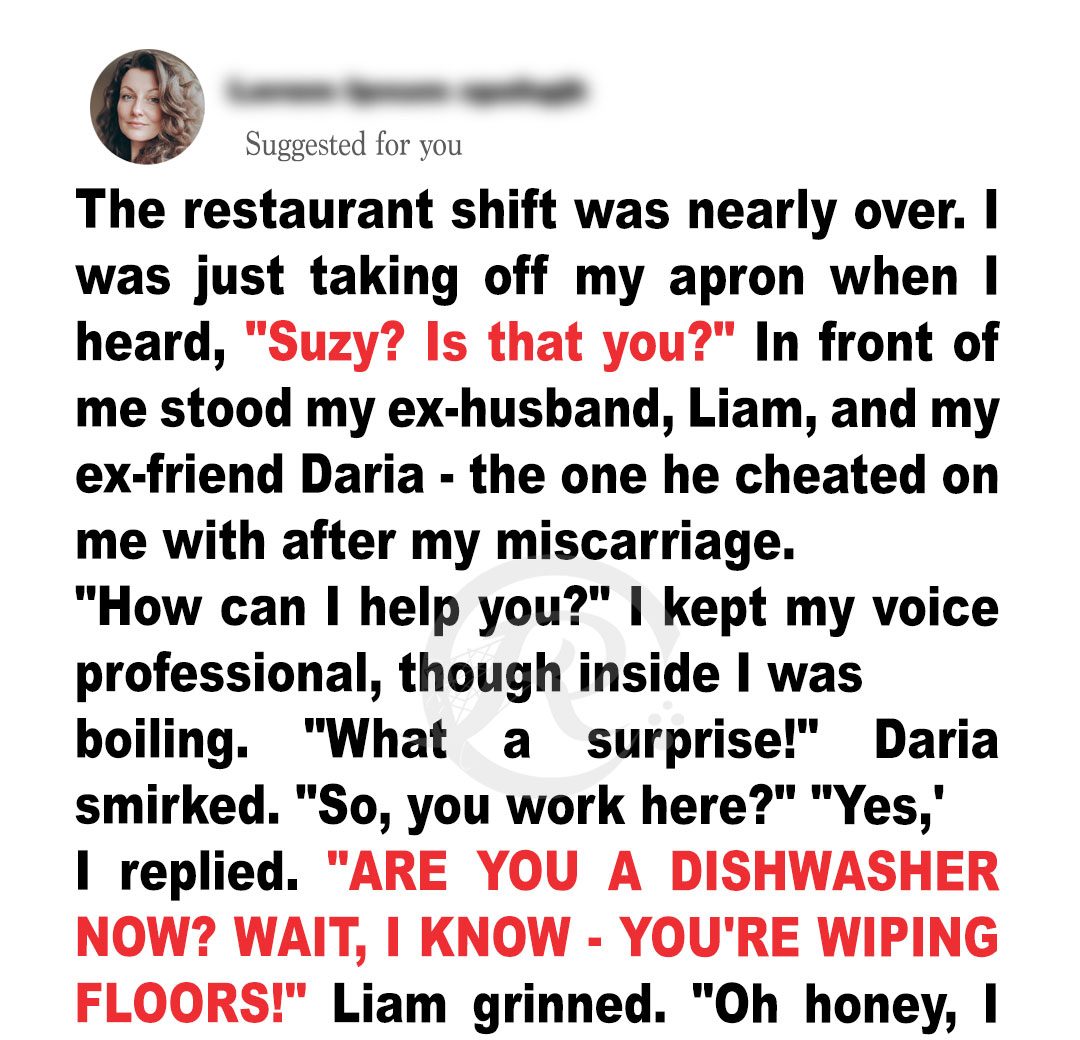
Then one night, almost closing time, I heard a familiar voice behind me: “Suzy? Is that you?” It was Liam and Daria — smug, amused, acting like they’d stumbled onto a set where they didn’t belong. Daria sneered at my apron and guessed I was washing dishes. Liam mocked me too, loud enough for others to hear.
I stayed calm. A barista walked by asking about his schedule, and I handled it with warmth and respect. Turning back to them, I simply said, “This is my restaurant.” The words hit harder than any insult. I explained I had designed the space, hired the team, and booked every seat weeks in advance. Their shock was unmistakable.
They tried to brush it off — asking for a table, mocking the food — but I stood firm. “We were fully booked,” I said. “Not today. Not ever.” When Daria threatened they’d return, I told them this wasn’t revenge — it was setting boundaries.
Later, I saw a one-star Google review from them calling me “bitter.” I responded publicly with grace:
“We reserve the right to refuse service to rude and disrespectful customers. I stayed professional despite my history. We choose dignity over dollars.”
That response changed everything. Loyal customers and new visitors flooded five-star reviews, praising the food, the atmosphere, and the respect they felt. A local food blogger even shared the review exchange with the caption: “This is how you serve justice — hot and seasoned.” Reservations doubled, and local news outlets called.
As for Liam and Daria? They disappeared like yesterday’s leftovers. Meanwhile, the head chef I’d hired — Mark — became my partner in life as well as work. Patient, steady, supportive — the opposite of the man who once mocked me. At dinner one night, he toasted:
“Revenge?”
I smiled and replied, “No — just dessert.”