Twenty years after my mother walked out of my life, she suddenly appeared on my doorstep carrying a grocery bag — and a desperate plea. What she said next forced me to confront a lifetime of hurt and what it means to break painful cycles.
I can barely picture my father’s face. He left when I was so young I only know him from his name on my birth certificate. But my mother, Melissa? I remember her — not in the warm, comforting way most kids remember their moms, but as a storm of anger that filled our tiny, run‑down house on the wrong side of town.
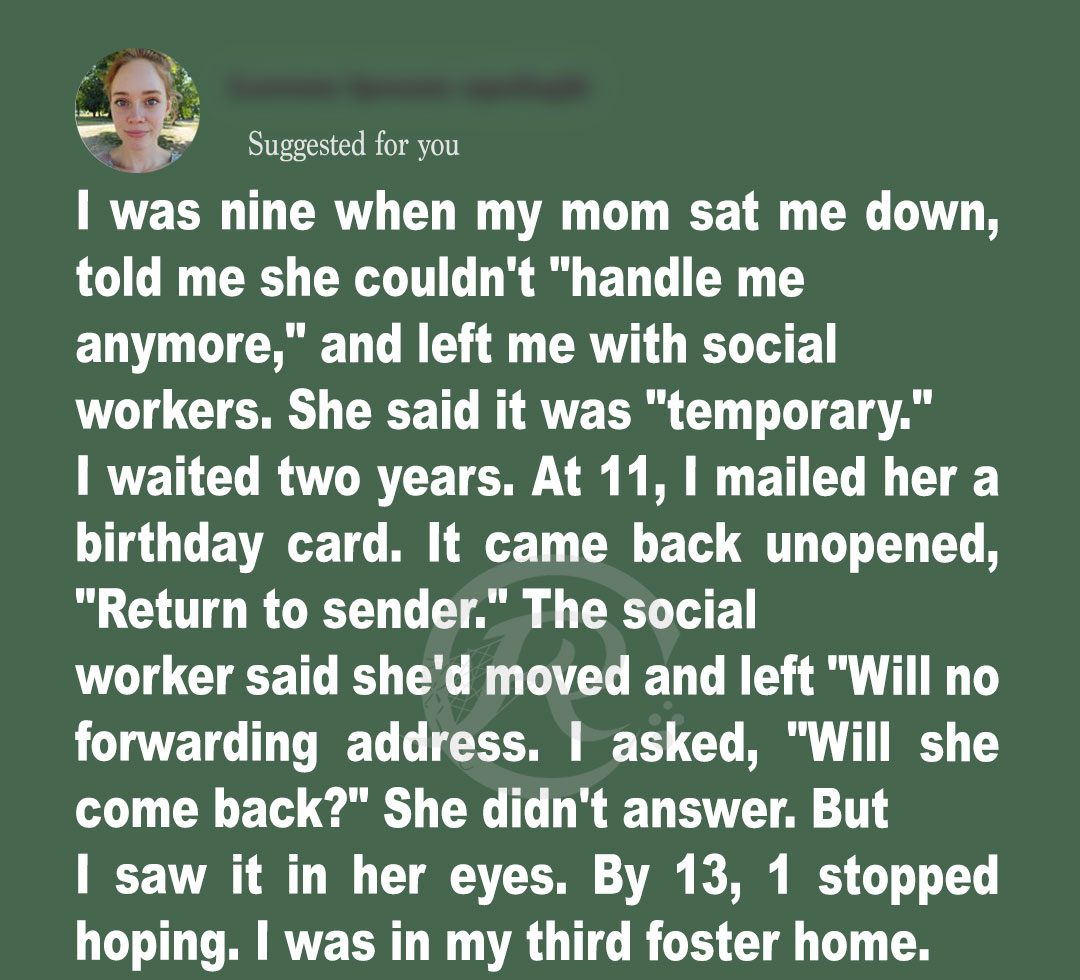
She worked long hours at a grocery store and came home exhausted and frustrated, muttering she couldn’t handle life anymore. At just nine years old, my world collapsed on a Friday in March — the day I aced a spelling test and walked in excited to share the news, only to find her with custody papers.
I asked what was happening. She said she couldn’t take care of me and handed me a garbage bag full of my things. A social worker named Mrs. Patterson arrived the next morning to take me away. I begged, cried, and clung to the hope that Mom would come back soon. Mrs. Patterson promised she would. And I believed it — for two whole years.
At eleven, I sent her a birthday card filled with love. It came back stamped “Return to Sender.” That was the moment I learned something devastating: sometimes hopes don’t come true. By thirteen, after bouncing through foster homes, I stopped asking when she would return. Hope was too painful.
Years passed. I built a life for myself — a loving husband, our beautiful daughter Emma, a cozy home in a safe neighborhood, and enough stability to finally breathe. I vowed I would never let my child feel what I felt: unwanted, unseen, unloved.
But one evening, a solid knock on the door disrupted that peace. I wasn’t expecting anyone. When I opened it, there she was — older, frail, holding cheap cookies and staring at me with eyes I recognized instantly. “You have to help me,” she said. “I’m homeless… you’re my only child.”
Even though every instinct screamed to slam the door, I hesitated. Maybe it was therapy talk about “breaking the cycle.” Maybe it was the child inside me who still hoped. So I let her in.
She stayed one night — then a week, then more. At first, she did small things like help with dishes. But soon her old bitterness surfaced. She criticized me and even tried to manipulate my daughter, whispering hurtful things about who I was as a child.
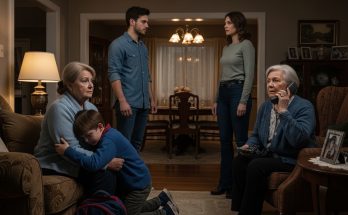
One afternoon, I found them together, my mom whispering to Emma that sometimes you have to step back from people who hurt you — even family. My heart, already scarred by pain, tightened. That night, I packed her things into the same kind of garbage bag she once packed for me.
I told her she needed to leave — not because I didn’t care, but because love shouldn’t hurt. She was shocked, insisting I’d “regret this — family is all you have.” I replied, “Love is all you have. And you lost the right to mine long ago.”
After she left, I watched my daughter sleep and felt something I’d never felt with regard to my own mother: peace. I even sent Mom a simple blank birthday card with this message inside: “Sometimes you have to step back from people who hurt you.”
I don’t wonder about her anymore. Because I finally learned what being a parent truly means: not what you need from a child… but what you’re willing to give. And I’m giving Emma everything — especially protection from hurt, even if it comes from someone who shares her blood.